Are you ready for a retreat into ‘The Silence’

Standard

IMG_2199

“We sit silently and watch the world around us. This has taken a lifetime to learn. It seems only the old are able to sit next to one another and not say anything and still feel content. The young, brash and impatient, must always break the silence. It is a waste, for silence is pure. Silence is holy. It draws people together because only those who are comfortable with each other can sit without speaking. This is the great paradox.” Nicholas Sparks, The Notebook

On Easter Friday, I went with my friend  on a hike with her dog. She mentioned that she wanted to try ‘Vipassana’ a retreat into silence for 10 days. I had heard of similar things that some of my other friends had attended.

My first question to her would I be able to read? Of course I knew that, ‘Vipassana‘ does not allow reading, writing, talking, listening to music or any form of communication.

I heard myself saying being silent is fine as long as I can read. Yeah, I think I can do that for may be three days, but ten full days, I doubt it.

She started sharing similar things that she needs music, or TV or books to read.

My sister puts the TV on as soon as she comes home. The TV is on but she is not watching it and probably barely listening to it. It is almost like background noise in her house.

How many of you know people amongst your friends or family who have the music or TV on though they may not be listening or watching the same.

Why do many of us find this need to be doing something at all times?

Is it to simulate our mind?

Is it to avoid the silence engulfing us? Why did I worry about not being able to read or listen to music when my friend and I were discussing about ‘Vipassana’?

Why did my friend have similar concerns?

Most common responses you are probably going to hear is

  • the silence is deafening
  • I’ve no idea what I’ll do with silence all around me
  • I need to avoid the weird thoughts that come to my mind
  • I need to quieten my mind
  • I’ll feel lonely in complete silence
  • I’ll go insane.

I was worried because I am scared of being silent with no form of communication. I’m silent many times during the day but I’m reading or working or listening to music or writing or thinking or hiking or at the gym or yoga. Although I practice Mindfulness for a short period of time in the day, I can’t imagine myself doing meditation for 10 days and just being with myself and my thoughts. The lack of a stimulant in the form of books, articles to read or music almost feels like a vacuum in the absence of not talking.

Mindfulness and the practice of meditation apparently has been known to strengthen our pre frontal cortex.

I’m piqued but not sure if I am ready to take this journey of ‘Vipassana’ yet. It is a challenge and just because it is a challenge I’m tempted to do it.

I derive a lot of strength in silence during the day and when I am ready to undertake the journey of “Vipassana”, I hope I find peace and strength from that experience.

What are your thoughts?

Have you been on a journey of ‘Silence’ ?

Does Hope Matter At The Face of Destiny?

Standard

How many times have you heard people say , “You Control Your Destiny” and not vice versa.

How do you progress in life?

How do you achieve what you are passionate about ?

How do you translate your vision into action ?

How do you on a day-to-day basis get to where you want to be ?

Each of us have our dreams, our passions, our purpose in life which drives us and makes us come alive ?

Without putting an effort our dreams would never get fulfilled, if we leave everything to destiny.

Yet Destiny plays an imperative role in our journey of life, one we can’t change.

Do I believe in destiny?

Recent events in my life have convinced me that we can’t change our destiny. Two of my close family members are facing destiny, as I type this.

My Father in law is battling with his life for the past two months in the ICU and my mother’s health seems to be on a continuous downtrend.  Doctors and family members are doing everything they can. Prayers, medications, enquiries with various experts continue but yet I and others in our family feel helpless.  It feels that Destiny is shaping their life and we are watching helplessly.

Destiny after all controls when we die, and no matter what, none of us can control it. Yes we can control how we live but if we are destined to die in a particular way there is no changing that.  When you go through such events in your life it makes you wonder do we have control over what finally dictates our fate?

My mom has always been very careful with the way she has lived her life. She has always been kind, thankful, and helpful. Though she came from a conservative family, she has always been bold and empowered herself in her journey of life. She has always been meticulous, disciplined and a human being from whom I have learnt a lot. Yet where she stands today, she suffers at the hands of destiny.

I often question as to why her ? Doesn’t the balance sheet of her life need to tally in that when all she has done is good, why make her suffer?

Old age has its own share of miseries some of which may be caused by the way we have lived our younger years and yet others beyond our control.  You may say why worry about things beyond your control. Yes, but when you see your mom suffer and you aren’t able to do anything, you feel helpless and defeated.

Have I given up hope? No, hope is what is taking me through from day-to-day. My mind is restless and the flight from Hope to hope through each moment is what carries me through.  Hope is the power of being cheerful in circumstances which we know to be desperate. –G.K. Chesterton

Extreme hopes are born of extreme misery. –Bertrand Russell

I can only pray for miracles at this stage. I pray that their suffering reduces. I am pained to see my Dad’s pain. He is the best optimist I have always known and yet there are times of despair in his eyes.

My mother in law is a woman of tremendous strength and yet she feels helpless and hopeless that she is not able to do much in being able to reduce the pain and suffering her husband is going through.

Each of our strength and character has been tested in the past several months.

What have I learnt and still learning?   To believe in destiny but yet not give up hope. I have reiterated to myself to be realistic but be positive and be gratuitous to what I have amongst suffering and despair. It is moments of positivity that carries me through. I remind myself to treat life well rather than get hung up on people’s attitudes, ego and arrogance. I consciously avoid the naysayers, the arrogant and egoistic people because they don’t matter. You know your true friends in your life’s challenges. I am learning to value each moment through mindfulness, rather than worry about how tomorrow is going to be.  I don’t want to lose each moment that has been gifted to me with my loved ones.

I don’t want to give up, so God help me.


Image – linked to the source

Top 5 Lessons That Pain Teaches You

Standard

Physical Pain is something that each of us undergo at some stage during our life. Many of us agonize over the pain that we undergo.   There is pain when we hurt ourself when we fall, hit ourself somewhere or from food poisoning, a surgery, a sprain, or a ligament tear. There are different kinds of physical pain : somatic, neuropathic, and visceral.

Have you ever asked or wondered as to how do you know when you sprain or twist a part of your body or when you have a tear of any tissue or  ligament or shoulder joint?

Do you take pain for granted?

For the first time, I realized after reading this article from the BBC, which appeared in July 2012, that there are people in this world who suffer from congenital analgesia.  Steven Pete and his brother were born with the rare genetic disorder congenital analgesia. They grew up – in Washington state, US – with a sense of touch but, as he explains in his own words, without ever feeling pain.

To suffer from physical pain is difficult and gets even more challenging for those whose tolerance level to bear the same may not be very high. Most of us moan and curse when we are in pain. Apart from all these pains is the emotional pain – pain in seeing our near and dear suffer, pain of regret, pain from having trusted someone who abused the trust.

Do you realize that pain can actually be a blessing ?

Physical pain warns you not to do something – for instance not walk with a ligament tear. Physical pain also enables you to determine an injury.

Emotional pain too can be a warning, for instance, to be careful of not trusting any person.

New brain scanning technologies are revealing that the part of the brain that processes physical pain also deals with emotional pain.

How can we use pain to grow, develop, to change and be human?

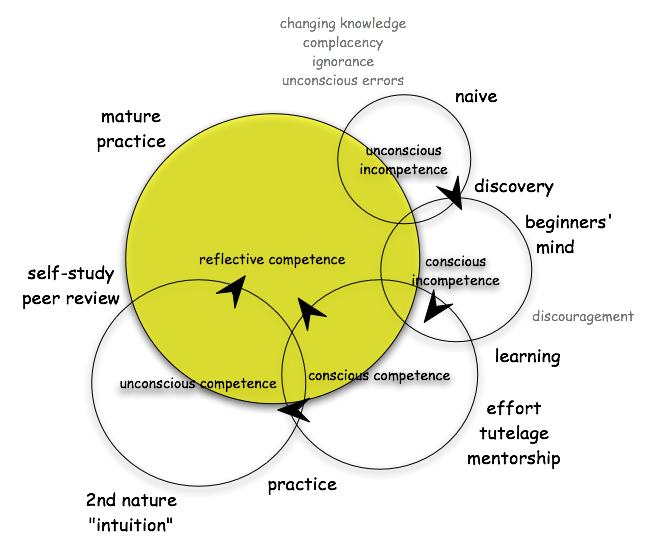
  1. Caution – many times because of your carelessness or being preoccupied with something or being unconsciously incompetent or consciously competent leading to overconfidence, you meet with accidents or perform an exercise in an incorrect way. Physical pain is thus caused. However if you were more conscious or not lost in your thoughts, chances of accidents reduce.
  2. Reduce regrets – you cannot control  every event in your life or for that matter influences in your life. What lies within your control is the meaning you attribute to each of these.  If you control the meaning or the impact of events in your life by creating as much value as you can, you will have a sense of purpose and personal power. Learn, unlearn and relearn from each regret and move forward.
  3. Recognize emotional blind spots – most of us tend to focus on the possible causes of pain and vulnerability. Instead if you were to try to ask what each hurtful incident means to you and what you can do to heal and improve. Recognize the emotional blind spots not by engaging in a blame game, self-pity, self-criticism or avoiding the hurt feeling but by being compassionate and controlling your attitude towards the situation. Ask What am I feeling?  What does it mean to me?  What can I do to improve and heal?   Ask for help from friends, family if you think you need to share.
  4. Thoughts – our thoughts control our feeling and our behavior.   Dale Carnegie was once asked what was the biggest lesson he had ever learned. He replied that, “By far, the most vital lesson I have ever learned is the importance of what we think.”   You see, Carnegie knew that our thoughts make us what we are—our mental attitude is the “X” factor that determines our fate. He quoted Emerson as having said, “A man is what he thinks about all day long…How could he possibly be anything else?”  Yes, if we think happy thoughts, we will be happy, if we think miserable thoughts, we will be miserable. If we think fear thoughts, we will be fearful. If we think sickly thoughts, we will probably be ill. If we think failure, we will certainly fail.  At the same time, Dale Carnegie knew that people couldn’t go around with a devil-may-care attitude about all their problems. Unfortunately, life isn’t so simple as all that. But he did advocate that we assume a positive attitude instead of a negative attitude. In other words, we need to be concerned about our problems, but not worried.  Our mind’s power to bring about change doesn’t stop with attitude, however. Remember…“Our life is what our thoughts make it.” Make yours strong, positive, and all it can be. For the full post click LINK
  5. Emotional intelligence – self-awareness is a crucial step in overcoming emotional pain. Once you are aware you can acknowledge it.  When you become aware that you feel emotionally vulnerable, allow yourself time and space to investigate your feelings. Use the power of your words. Remember your words create your thoughts and align your energy in a specific direction. Emotional memory management enables us to manage our emotions in a way that will produce more positive outcomes. I like to think emotions as colors, some simple, and yet others are blends.

As a leader if you are emotionally vulnerable, your department and the organization as a whole will experience high turnover and absenteeism.

How have you dealt with pain?

What have been your takeaways from each occasion of pain ?

Have You Befriended “The Gremlin”

Standard

Belonging starts with self-acceptance … Believing that you’re enough is what gives you the courage to be authentic. – Brene Brown, research professor in social work

Who do you give more airtime to; your “Inner Champion” or your “Inner Critic”

A client of mine, let’s call her Jane had this struggle with her inner village. A pompous voice that always kept telling her that she will fail miserably when speaking in front of crowds.

If you look at Jane, she is an individual who exudes confidence in whatever she does in her other aspects of life. She has ventured out into many challenges in her work and personal life. However, in whatever she does she feels she is an underachiever and she can do better. She expects herself to always do better.

As far as public speaking was concerned, her inner critic dominated her and controlled her actions to her detriment.

As we engage with the world, many times we internalize the voices of our significant others, voices that encourage, voices that criticize, empowering voices, supportive voices, cautious voices, loving voices. And there is our voice of our own inner village that encourages and champions us in our endeavors and other times criticizes us and undermines our potential. The voice of the inner critique is one that loves to break us, stroke us and doubt ourselves. She falsifies your ego by justifying why you don’t want to do something.

When I asked Jane how long she has dealt with her critical inner village, she said “12 years.” And she was giving attention to it for 12 years.

She mentioned that her inner village always liked to bully her, tease her, remind her of all things that could go wrong if she had to speak in front of a crowd, how bad she was when she spoke, how her body language, facial expressions, and the way she spoke was improper. This inner village was almost always with her and spoke to her loud to discourage her. When she was dominated by her inner critic, if she happened to hear anything from her personal relationships, she found herself further vulnerable and in a flight or fight mode, though she never displayed it.

She came to me at a time when she realized that a strategy of trying to shut herself from this voice of the inner critic didn’t work. She realized that the situation was becoming worse. She couldn’t run away from herself. She had to face her inner demons, deal with them and overcome them.

So how does one recognize their inner critic, accept it, learn to deal with it and move on with life without this demon stopping you from living your life.

Questions you need to ask yourself – READ ON... FOR FULL POST PLEASE CLICK LINK

image source

Top 5 Secrets To Make Resolutions Happen

Standard

Albert Einstein said, “The world as we have created it is a process of our thinking. It can’t be changed without changing our thought.”

At the beginning of each new year, many of us make resolutions. These resolutions may be to eat healthy, exercise more, sleep early, practice mindfulness, be more patient, stop multitasking, etc.  Most of these resolutions are goals we set ourselves for self-improvement. We need a constant mindset to improve daily.

What is common in all the above cases ? It is a Resolve.  A resolve to

  • Do better
  • Be better
  • Change for the better
  • Speak up against injustice and oppression.
  • Recognize our inner critique and not allow it to be our bully.
  • Listen to our inner voice every time we waiver from being a human.

 There is a fixity of purpose, and unless we have this resolve and take a step ahead by committing to this choice, change will not happen.

I like to think a resolve adds meaning to random thoughts, procrastination to change and forces us to commit to the change. It is something we set our mind to and goes beyond a random wish. It is an enthusiasm, a passion to explore and turn into better realities rather than come mid year when we realize that we have forgotten about the new year resolutions.

How does one stick to one’s Resolve? Effective management of any change requires managing five key goals which is well explained by the ADKAR model.

1. Awareness:  to change a habit or a behavior or a situation, you have to want to change.

For that it is important to ask:

How do you view the current state?

How do you perceive the habit or the behavior or the current situation?

Contestability of the reasons for change?

WHY is it important to change?

2. Desire to want to change. A desire to participate and support the change. What are your intrinsic motivators unique to you to allow for change

3. Knowledge of how to change and what the change looks like. If I want to lose weight, I need to know how to go about losing weight and what will the process will look like. Important considerations here are your current knowledge base on the area you want to make the change in, capability to gain additional knowledge, what are the resources available and can you gain access to all or most of the relevant resources.

Let’s take the case of a woman facing domestic violence. She has got through step 1 and 2, the A and D, then she needs to ask herself what is her current knowledge on how she is going to stop being a victim of domestic violence, what resources is readily available to her that she already knows of, how is she going to gain additional knowledge of the sources of information to help her out of this situation – may be help line nos., the steps she needs to take to ensure her own safety and finally how easily accessible is each of these resources

4. Ability - do I have the ability to change. What if any are the psychological blocks (what in your own mindset that will work against you), physical and intellectual capability where relevant, and the time you are willing to devote to make that resolve happen. If your resolve is to get over your fear of public speaking, you need to evaluate your mental blocks, befriend your inner critic, time you are willing to devote to practice and get over the fear, the willingness to get a help from a coach who can assist you in making that resolve happen

5. Reinforcement - sustainable change rather than for a short time. The degree to which the change is meaningful (I’m making a difference), the absence of negative consequences, the ability to overcome hurdles along the journey and an accountability mechanism that creates an ongoing mechanism to reinforce the changes. The mindset above all to keep the change in place despite humps and setbacks along the way.

In an organizational context it is important for the managers and the leaders to recognize that all have talents, skills, and abilities. Question to ask in the process of any change is how do you apply the talents, abilities and resources you have. It is important to engage the team in a cause bigger than themselves, something they feel passionate about and one that makes them come alive. A true leader knows this, understand this and is able to provide this in an organization.

In any personal change, to commit to change ask yourself what is the trigger? Is it an adversity or a reward? What value are you creating for yourself and the people around you by resolving to change? In any change it is important to be aware of the value in it before you can make the change. Only then can you engage in the resolve with your heart, your brain and your guts.

The world is full of thinkers, dreamers and talkers. You can make a difference by making things happen because you believe you can.

What are your psychological blocks?

What are your reinforcements?

What are your triggers

Are you committed to change?

 “If you really desire something, the whole universe will conspire to help you.” ― Paulo Coelho, The Alchemist. I would add if you desire something and commit to that desire nothing can stop you. You will make The Resolve happen.

image source

“Be My Valentine – 1 Billion Rising”

Standard

As I’m writing this in the wee hours of the morning, before the crack of dawn, Valentine’s Day is slowly but surely rolling out.

The Valentine Day fever or retail mania has started off a week to 10 days back even in the non Western world. From India, Pakistan, Hong Kong, China and various nook and corners of Asia, it is almost impossible to miss the fervor of this special day.

What is Valentine’s Day ? I won’t bore you with details but for the curios mind, you can check the link.

The significance from what I have read and understood is that it marks the Feast day of Saint Valentine; the celebration of Love and affection.

In my view, love and affection can be to your mother, wife, girl friend, boy friend, spouse, friend, brother, sister, father, child or for that matter to any human being.

I’ve never been a big fan of Valentine’s Day because the true meaning has been lost over the years in the way it is commercialized and has in my view become one of the biggest money-making business. One loses their peace of mind with advance restaurant bookings, retailers wooing you with the Valentine’s Day clichés, set menus in restaurants with no choice left to you to choose what you desire to eat.

On this Valentine’s Day and going forward ask yourself 

  • Is this all that Love and Affection is about ?
  • Are you further victimizing a woman who has already been sexually assaulted by your attitude and lewd comments ?
  • Do you find power in degrading a woman mentally and physically ?
  • Are you not ostracizing woman when you make statements to the effect that woman walk in perpetual consent when they dress the way they want?
  • Are you not being an oppressor watching a rape or sexual assault silently ?
  • Are you not contributing to violence against woman when you watch TV shows and movies that show woman as a commodity ?
  • Are you not being a sexist when you engage in verbal sexual assaults or silently watch the same against a woman ?
  • Are you not bringing disdain to love and affection when you decide to abort a child when you determine the sex of the child is female ?
  • Are you not aiding and abetting with the oppressors when you don’t raise your voice against Female Genital Mutation, sexual abuse or harassment or female feticide or any other form of violence against women. 
  • For anyone who thinks women should ignore online harassment, and not react, would you do so?  Would you ignore it if you are abused, and threatened on-line ?
  • Why do you as society victimize a female and view her with a cacophony of distrust ?
  • Are you treating the woman in your life with love, affection, respect and care? 
  • Are you being human while dealing with a woman ?

Key Highlights from onebillionrising.org. Watch the Video  http://t.co/uK97Qnko.

“ONE IN THREE WOMEN ON THE PLANET WILL BE RAPED OR BEATEN IN HER LIFETIME.

ONE BILLION WOMEN VIOLATED IS AN ATROCITY

ONE BILLION WOMEN DANCING IS A REVOLUTION

On V-Day’s 15th Anniversary, 14 February 2013, we are inviting ONE BILLION women and those who love them to WALK OUT, DANCE, RISE UP, and DEMAND an end to this violence. ONE BILLION RISING will move the earth, activating women and men across every country. V-Day wants the world to see our collective strength, our numbers, our solidarity across borders.

What does ONE BILLION look like? On 14 February 2013, it will look like a REVOLUTION.

ONE BILLION RISING IS:

A global strike

An invitation to dance

A call to men and women to refuse to participate in the status quo until rape and rape culture ends

An act of solidarity, demonstrating to women the commonality of their struggles and their power in numbers

A refusal to accept violence against women and girls as a given

A new time and a new way of being.

Change starts with you, with your family. If you change your mindsets and attitudes, and every member of your family did the same, this world will no longer have woman who are treated as a Sexual Commodity to be harassed, tortured, raped, humiliated or killed. 

Start now, start today. Speak up, spread the good word of Be A Human and a Woman is Human. Raise your voice as a human being and bring Violence Against Women to an END. 

Image Source 

Titles Don’t Matter-10 Keys To “Good For Soul”

Standard

“The simple act of paying positive attention to people has a great deal to do with productivity” Tom Peters

Have you met Jerry ?

1. I’m always right. I don’t care what it takes or how much work it is. This is the way I see it and no matter what, make it happen in the next hour.Have you met Jerry?

2. Your behavior at or outside work or in Social media is one of “A Narcissist”.

3. You think you know it all and never have an open mind to learn.

4. You’ve decided with senior management that your team targets are going to increase by 30% and promised to over deliver. You have not bothered to consult your team?

5. You think you never make mistakes and don’t ever bother asking others how are you?

6. You are good at striking conversations with strangers but every relationship is one to hook, use and trash.

7. You are convinced that you are the most intellectual and anyone who challenges your line of thinking is made to shut up. You alienate whoever questions you.

8. You think you are reminding people of their accountability and responsibility when all you do is to humiliate them with your sarcasm.

9. You are part of the system and you have never made any effort to be different or change and yet you criticize all, day in day out.

10. You think you are unique and God’s gift to the Universe, though all you are is a jerk. You think none of the above applies to you.

How many of you have had this individual either at your work place or among your acquaintances? 

How many times do people in influential positions misuse the same by bullying and belittling either their team and their social circle ? 

How many people just because of the position they are in think they can demand respect ? 

Whilst there is nothing wrong in being direct and honest, by no means the delivery of the statements or the tone in which it is delivered needs to be rude or sarcastic. People skills is one about being able to connect, engage and treat others with respect and empathy.

What are the keys to People Skills?

1. Be a friend before expecting others to be friendly

2. That either we control our attitude or it controls us. Choose the right one

3. We are a result of our choices and we need to deal with the choices we have made. Negativity and emotional trauma arises when we get into the blaming game for all our misfortunes

4. We do get angry, recognize it, overcome it and do not use anger to be cruel

5. We need to value ourselves and should not allow ourselves to be trampled on. But valuing yourself doesn’t mean insulting others

6. Each of us have our own strengths and we should build and use them to lead with integrity, trust and character

7. Each of us have our own weaknesses and we should marginalize our limitations to move forward

8. That we are responsible for what we do, no matter how we feel

9. We are human and love to be acknowledged, encouraged and appreciated. Being an introvert or shy is no excuse for not telling someone ‘You Matter’

10. None of us are perfect and can teach and learn something each day

Each of us have our purpose. Just because you are the boss, you have no right to stomp on others feelings and values. As far as people like Jerry are concerned one can attempt to unlock the barriers of communication that may exist or be a friend to listen.

Titles don’t determine your value. In the end, you need to remember just because you think you are successful, you have no right to put out someone else’s light and efforts.

Life is a journey of roller coasters and challenges you to be the best YOU can be. Each challenge, be it big or small, is an opportunity for you to make the choice to shift your perspective and view it through the eyes of positivity and hope.

Character is higher than intellect. A great soul will be strong to live as well as think. Ralph Waldo Emerson 

Image Source